
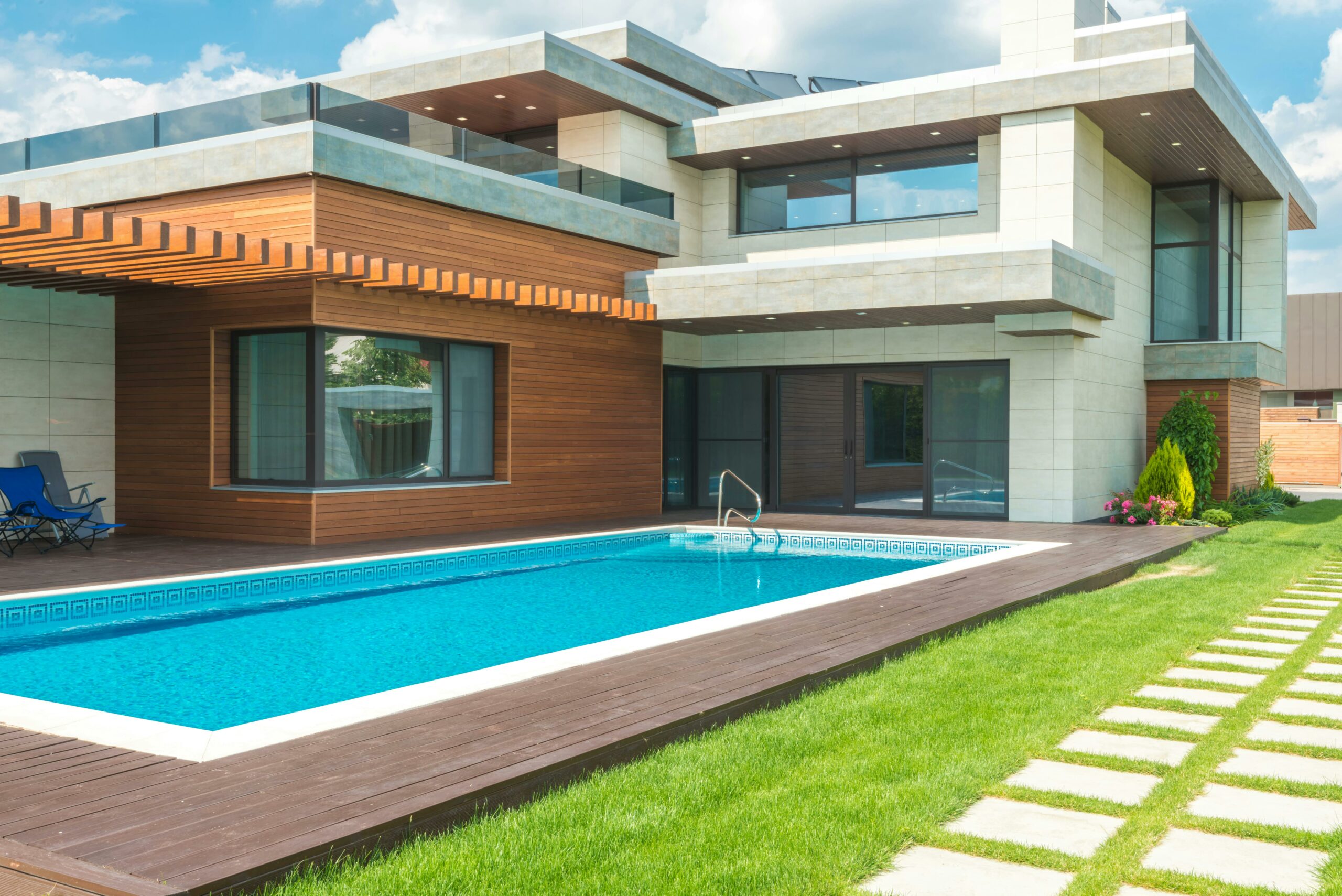
You’ve probably asked yourself this question at some point. Maybe you’re thinking about installing a pool and wondering if it’s a smart investment. Or maybe you’re about to sell your house and trying to figure out whether that beautiful blue rectangle in the garden is actually going to bump up your asking price – or just scare off buyers who don’t fancy cleaning it every weekend.
Honestly ? The answer isn’t as simple as a yes or no. And that’s exactly what we’re going to dig into here.
Before anything else, if you’re thinking about selling and want to get a clearer picture of your home’s current market value, tools like immobilier-estimation-gratuite.fr can give you a free estimate based on real data – useful starting point before you make any big decisions.
The short answer : it depends on where you live
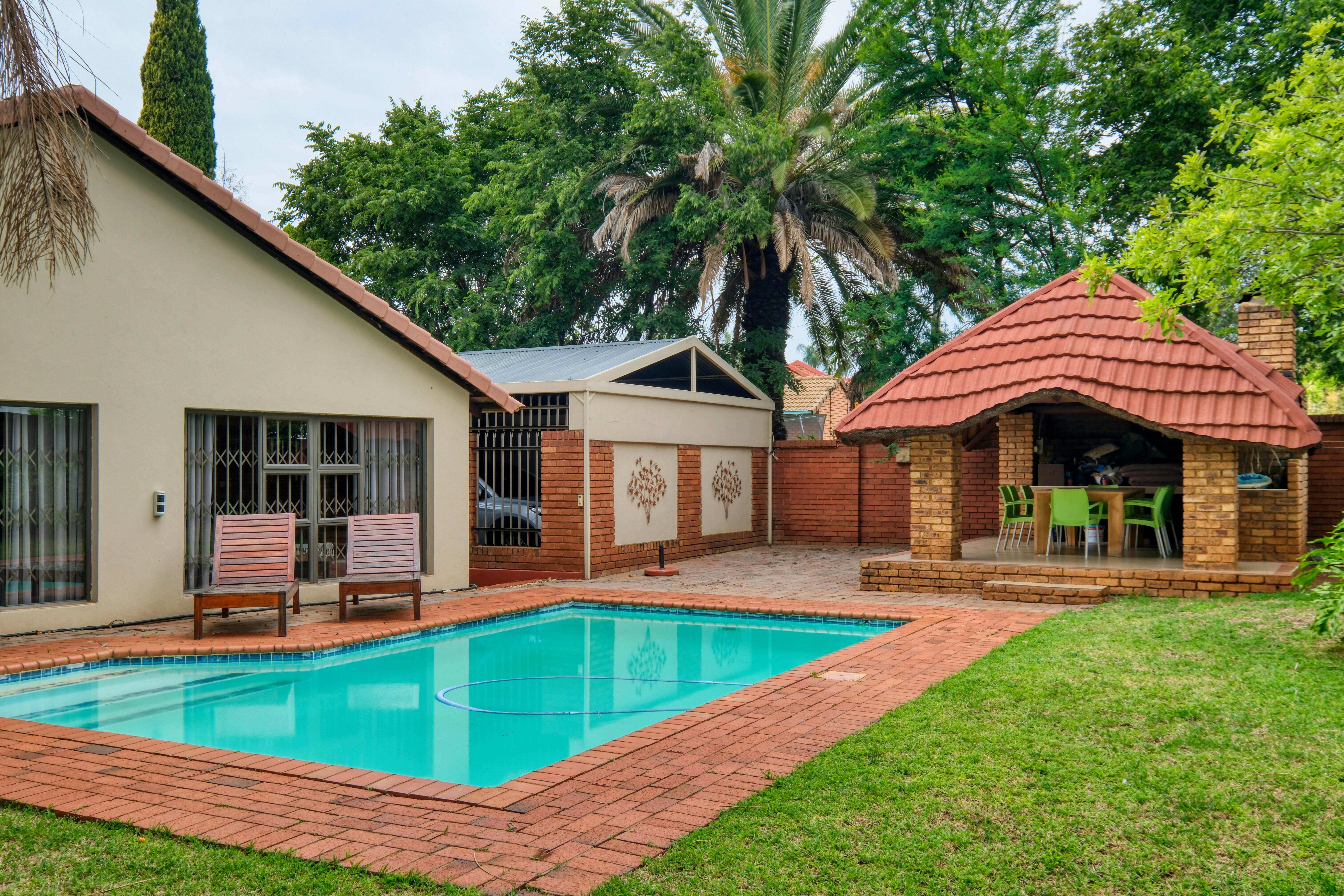
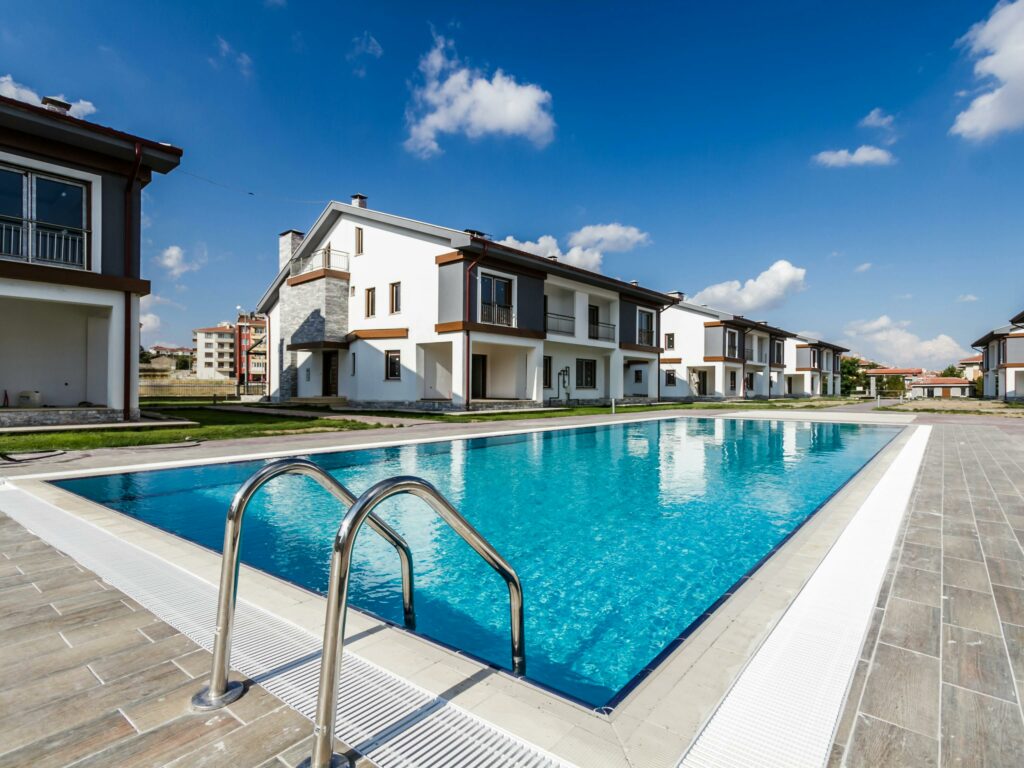 A pool adds value. But not everywhere, not always, and not by the same amount.
In the south of England – think Surrey, Sussex, or any commuter belt village with large gardens – a pool can genuinely be a selling point. Buyers expect a certain lifestyle there. A well-maintained pool fits right into that picture.
In the north of England, or in urban areas where gardens are smaller, the story is very different. A pool might actually put buyers off. They look at it and think : maintenance costs, safety risks if they have young kids, and nine months of grey skies where the thing just sits there looking sad under a cover.
So the first question to ask yourself is : who are the buyers in your area, and what do they actually want ?
What the numbers say (roughly)
There’s no single official figure here – anyone who tells you “a pool adds 10% to your home’s value” is oversimplifying.
That said, property professionals and surveyors in the UK generally suggest that a pool can add somewhere between 5% and 15% to a property’s value – but only in the right context. That means a detached home, a decent-sized plot, a desirable location, and a pool that’s well-maintained and visually appealing.
A cracked, green-water pool with a broken pump ? That’s not adding value. That’s a liability. Buyers will either walk away or use it to negotiate a lower price.
Running costs : the thing nobody talks about enough
This is where it gets real. A pool looks great on the listing photos. But savvy buyers – and there are more of them than you’d think – will immediately start calculating the annual running costs.
Heating, chemicals, electricity for the pump, a service contract, cleaning equipment… you’re realistically looking at £1,500 to £3,000 per year just to keep a standard pool in good shape. Maybe more if it’s heated and covered, or if you use a professional maintenance company.
Some buyers genuinely don’t mind that. They want the pool and they’re prepared to pay for it. Others hear those numbers and politely back out of the viewing.
Age and condition matter more than you’d expect
A brand-new pool, well-designed and recently installed ? That’s a different conversation to a 20-year-old concrete basin with faded tiles and an aging filtration system.
Older pools can come with hidden costs – liner replacements, plumbing issues, equipment upgrades. Buyers know this. If your pool is ageing, you may want to either invest in a proper renovation before selling, or price realistically and be transparent about the maintenance history.
I find that sellers sometimes overestimate the value of an old pool because it cost a lot to install years ago. But sentimental value and market value aren’t the same thing. Not even close.
Pools and planning : a quick word
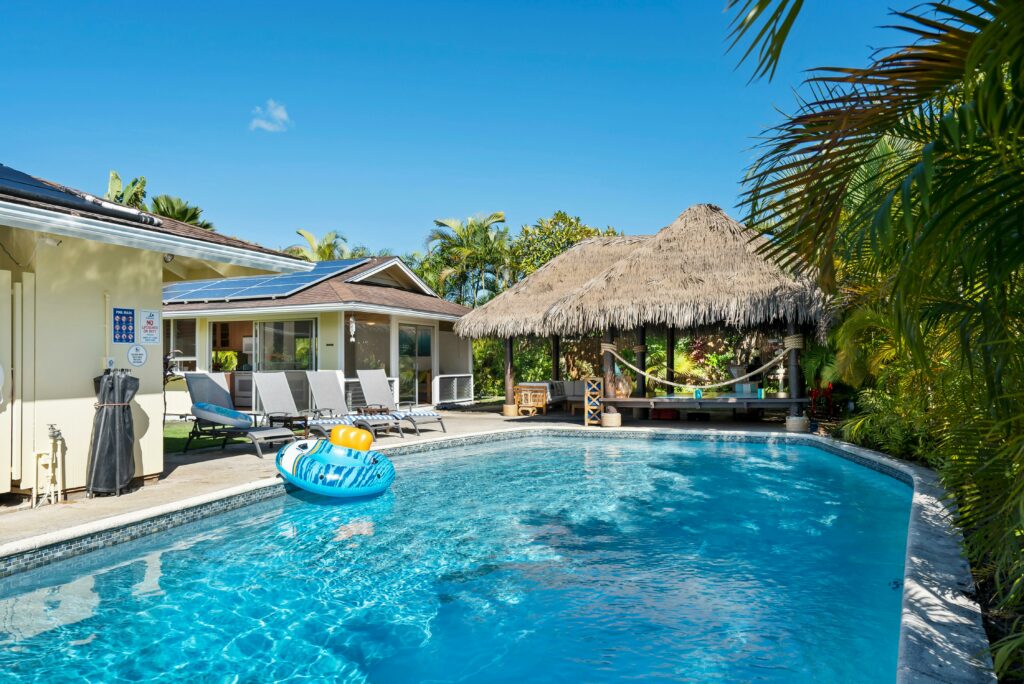 In the UK, installing a swimming pool in your garden generally falls under permitted development – meaning you don’t usually need planning permission, as long as it’s not in a conservation area or in front of the house. But it’s always worth checking with your local council before you start digging.
If you’re buying a property with a pool, it’s worth confirming that the original installation was done correctly and that building regulations were respected where applicable. A good surveyor will flag anything unusual.
So, does a pool add value or not ?
Let’s be direct about it.
Yes, a pool can add value – if you’re in the right location, the pool is in excellent condition, and your target buyers are the kind of people who actively want that lifestyle.
No, it won’t always add value – and in some cases it can actively reduce your pool of potential buyers (no pun intended), particularly in cooler regions or smaller properties where outdoor space is limited.
The honest advice ? Before making any decision – whether you’re installing, renovating, or selling – get a proper valuation of your property and talk to local agents who know your specific market. They’ll tell you whether your pool is an asset or a question mark in your particular postcode.
Either way, make sure the pool is clean, functional, and well-presented. A beautiful pool that looks inviting in photos ? That at least gives you a fighting chance.